The truth about the crackdown on Chinese buyers
Australia’s escalating crackdown on Chinese housing investors is reportedly painting the nation as racist.
Senior real estate figures told The New Daily they support the new rules imposed on Chinese buyers in recent weeks, including heftier state taxes and higher loan-to-value ratios.
But what concerned one of the experts was that the rules are being interpreted by the Chinese as “xenophobic” because of the “Pauline Hanson factor”.
Malcolm Gunning, former president of the Real Estate Institute of NSW and founder of the Gunning agency, said he supported the rules in principle, but not how they are being politicised.
The new stamp duty surcharges in Victoria, New South Wales and Queensland were reported prominently in Chinese newspapers – “this makes the second page” – rather than relegated to the property pages because of perceived racism, Mr Gunning said.
“The taxes are a disincentive, but are not a knockout. What is concerning is the perceived debate around foreign investment, particularly Chinese. And I know that’s a fact because I deal with them regularly.”
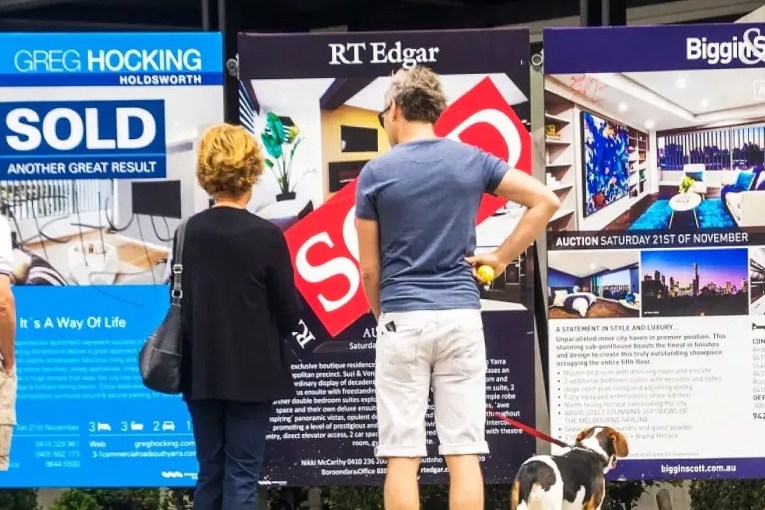
The fear on the streets is that a flood of Chinese investors is killing off the Australian dream by inflating prices. It continues to be a hot button issue. One Nation leader Pauline Hanson told voters during the election that Sydney suburbs were being “swamped by Asians”.
‘Most aren’t even foreigners’
A contributing factor to the “xenophobic” response is the confusion between foreign Chinese buyers and Australians of Asian heritage, Mr Gunning said.
“We have plenty of Australian citizens that are from Chinese heritage who tend to want to buy in suburbs which have good transport and are close to city amenities.
“We can get a room full of bidders at our auctions – 75 per cent will be Chinese. There might be two or three who are foreigners.”
‘Beware of killing the golden goose’
Mr Gunning said valuers in Sydney were telling him that the level of inquiries and pre-commitments for off-the-plan developments outside the 5km radius of the Sydney CBD, and inside the 20km ring, had “pulled back significantly”. He said this imperilled the “golden goose” of stamp duty revenue on which Victoria and New South Wales rely heavily.
Data on pre-commitments is difficult to obtain. Two of the nation’s foremost real estate data firms, CoreLogic and BIS Shrapnel, were unable to provide data to verify or refute this claim.
Another property expert, Real Estate Institute of Australia president Neville Sanders, said he had seen no impact: “Often the numbers that support that feeling take time to filter through the market into data, but so far there doesn’t appear to be any significant change in that, no.”
The crackdown
Mr Sanders said of the new and existing federal and state restrictions on foreign ownership that “it would seem the balance is right”.
Federal enforcement
Foreign buyers are restricted by the FIRB to buying new or development properties, and must seek the board’s approval to buy such properties.
In the 2014-15 financial year, the latest period for which data is available, the Foreign Investment Review Board approved 36,841 residential real estate applications, 59 per cent more than the previous year, a “large proportion” of whom were Chinese investors.
The REIA’s Mr Sanders said the government had sought to better enforce these rules in recent years. For example, a total of 27 illegally purchased properties were forcibly sold in 2015, the FIRB reported.
The Australian Tax Office (ATO) also began compiling a national register of foreign ownership of land titles in July.
Also, from 1 July 2016, purchasers of property owned by foreign residents must withhold 10 per cent of the purchase price and give that amount to the ATO as capital gains tax. The foreign resident must then complete a tax return to adjust that amount.
State taxes
The eastern states have all created or increased stamp duty surcharges for foreign investors, which bump up the amounts of state taxes paid by these buyers.
Victoria increased the additional stamp duty on foreign purchases from 3 to 7 per cent of the purchase price as of 1 July 2016. Absentee landholders will also face a more onerous surcharge of 1.5 per cent on their land taxes from 2017, up from 0.5 per cent.
New South Wales introduced a 4 per cent surcharge on 21 June. And as of July, it required buyers and sellers to prove their residency or citizenship before completing a sale.
Queensland will also introduce a 3 per cent surcharge from 1 October 2016.
Big Four banks
As reported by Robert Gottliebsen and others, the big Australian banks are lifting the deposits required from Chinese off-the-plan buyers from 10 per cent to 20, 30, 40 or even 50 per cent, and refusing to lend to foreign residents with no Australian-derived income.
The REIA’s Mr Sanders said he had seen anecdotal evidence of this curbed lending, and said his organisation supported the new measures.
“If they were really severe, we would be vocal about it. But at the moment, I think the population is understanding there’s got to be reasonable, prudent lending.”