Wrong kinda magic: Brian May pans AI image of Queen

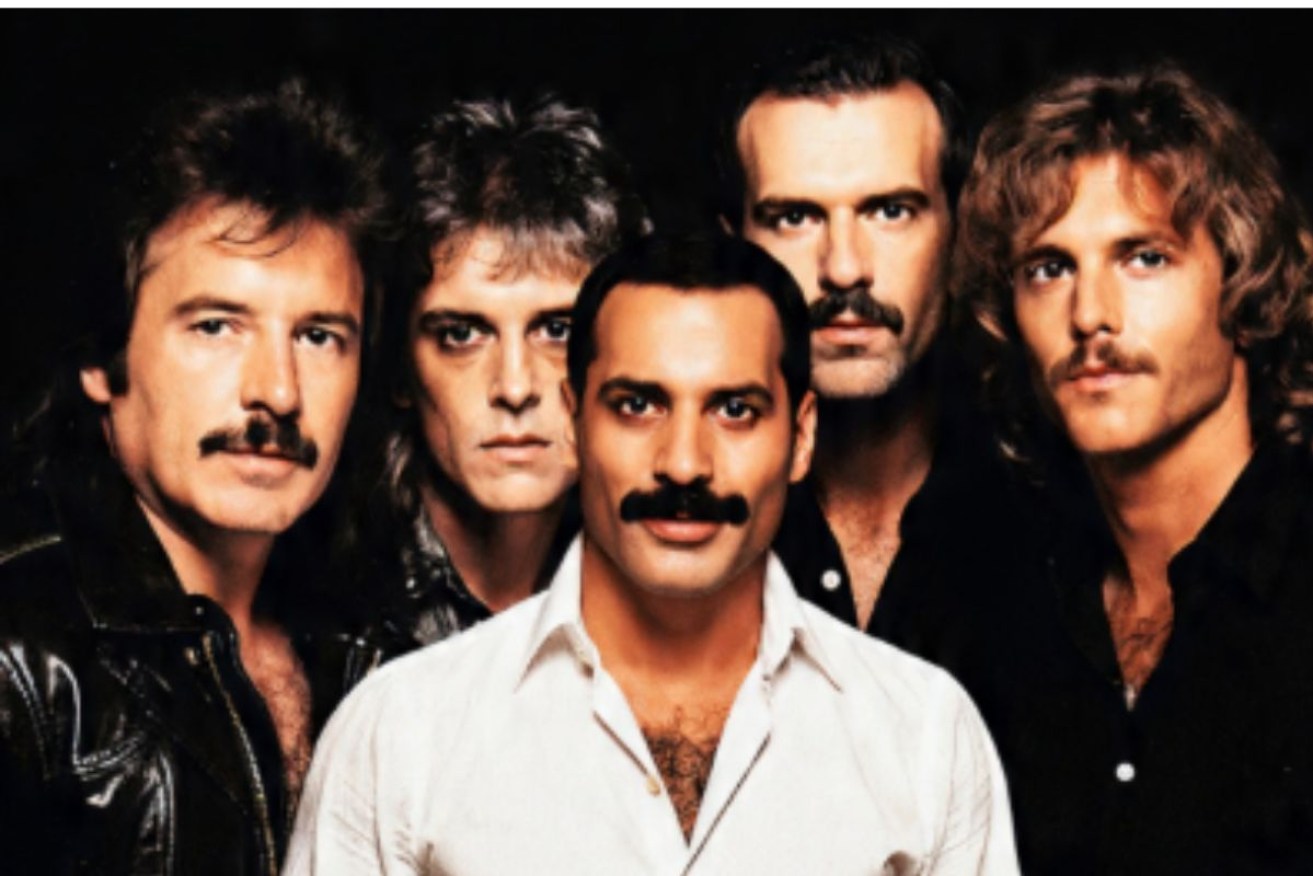
How Meta AI reimagined the cover of Queen's The Game album. Photo: Brian May / Instagram
Queen guitarist Brian May has vented about the spread of artificial intelligence and “hideous” data centres while sharing an AI-generated image of the hit-making British band.
In an Instagram post shared the same week music streaming platform Spotify announced it would label AI-generated artists, May said he had asked Meta AI to show him what the cover of Queen’s 1980 album The Game looked like.
“This is what it gave me! Good job, eh?” he captioned the picture (above), which showed not four but five band members, with Freddie Mercury front and centre and the others – including himself – barely recognisable.
“So this is the kind of intelligence that will soon be ruling the world??! Well, great.”
The original cover the The Game, which was the band’s eighth studio album and their best-selling release in the US, featured May, Mercury, drummer Roger Taylor and bassist John Deacon all dressed in leather.
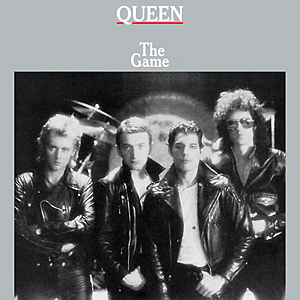
The real album cover.
Many of those responding to May’s post agreed with his sentiments, with one commenting: “It looks like Queen, the Eagles, and Judas Priest had a family.”
“Queen according to AI: Freddy Mercury, Farouk Bulsara, Barry Lurex, Rodger Taylor and Roger Tailor,” wrote another.
Queen – co-founded by May, Mercury and Taylor – is known for a string of 1970s and ’80s hits including Bohemian Rhapsody, We Will Rock You, It’s a Kind of Magic, and Another One Bites the Dust (which featured on The Game).
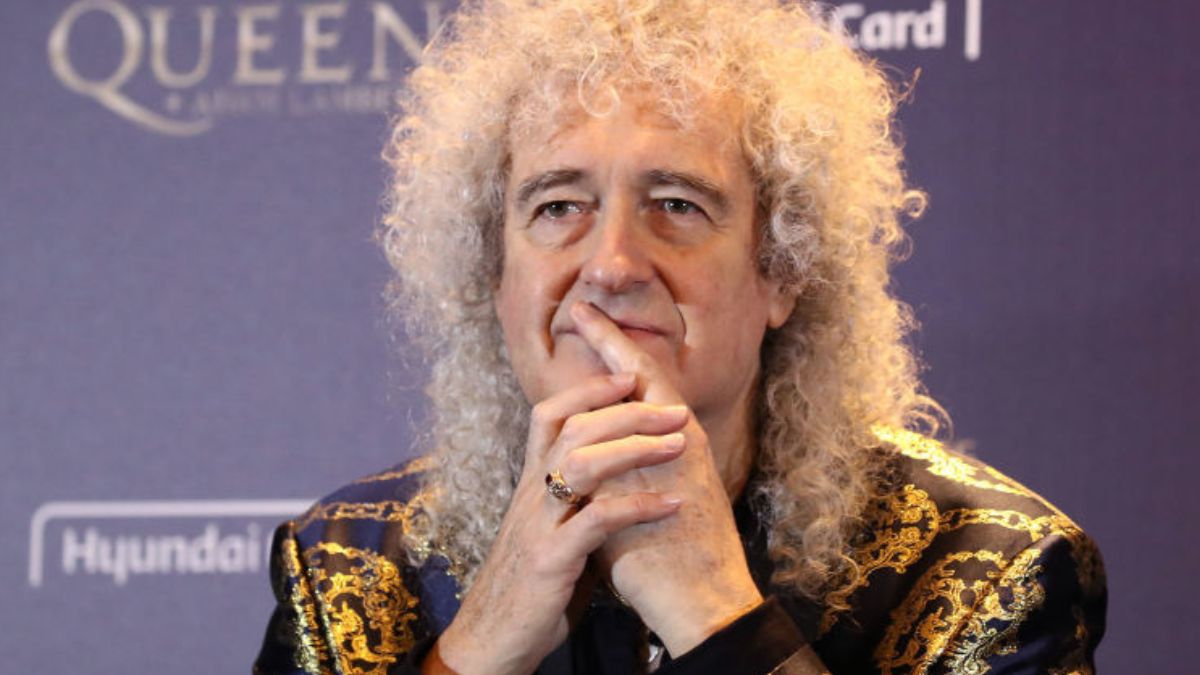
Brian May argues the world doesn’t need AI.
These days, 79-year-old May describes himself on Instagram as a “musician, astronomer, stereoscopist” who is committed to fighting for wild animals.
Continuing his rant about artificial intelligence, which was followed by an unrelated series of photos and images captured during the rare solar eclipse in Europe, the musician suggested to his 3.6 million followers that it might be time to realise “we don’t actually need AI”.
He also called on new British Prime Minister Andy Burnham to stop the building of AI data centres.
“But I’m now very serious,” May wrote. “I believe the price we are about to pay for this ‘inevitable’ development is way too high.
“We must not allow these hideous Data Centres to be built in the UK. They will destroy our beautiful country, like they are already destroying beautiful America. Dear Andy – you must stop it now. Before it’s too late. Bri.”
May’s comments come after the Albanese government announced plans to introduce legal requirements governing AI use and data centres in Australia, and South Australia revealed plans for a royal commission to investigate the rapidly evolving technology.
Musicians, meanwhile, have been divided over artificial intelligence, with some fearing it could have a devastating impact on the industry, while others are already are already using it to produce new music. Former Culture Club frontman Boy George, for example, has confirmed his controversial recent pro-Israel track We Will Dance Again was made with AI.
Spotify revealed last week that it was taking action in response to listeners’ concerns about difficulties in identifying AI-generated music.
From mid-September, the platform’s users will begin to see the AI Persona badge on accounts which do not represent a real artist, and music from those artists will be removed from editorial or algorithmic recommendations. The AI Persona tag will not apply to human artists who have used AI in the creation of their music.
“Listeners have been clear in telling us that they don’t like seeing an artist profile that seems human, only to find out that the persona is AI-generated,” Spotify said in a statement.
“That’s why, starting mid-September, you’ll begin to see an AI Persona badge on some artist profiles.
“The badge signals to listeners that an artist’s identity may be AI-generated and does not represent a real person. Alongside artist profiles that self-disclose as AI Personas, we will also start applying badges to relevant profiles.”
The platform said it wants to be “the most transparent and trustworthy place to listen to music”, and added that its programming is “focused on elevating music from authentic artists building careers in music”.
Before the labels are added to accounts, Spotify has said it will give the creators of AI-generated accounts the opportunity to self-disclose.
“We know the music ecosystem is evolving, and so will our approach,” it said. “We’ll continue to adapt as the landscape changes and as we learn from artists, listeners, and industry partners.”
–with AAP