Australia’s time to shine as climate talks begin


Australia can play a key role in developing action to mitigate climate change, starting later this year. Photo: Getty
This week will bring the first phase of talks paving the way to the next UN Climate Change Conference to be held in Türkiye later this year.
It is a historic moment for Australia as Climate Change and Energy Minister Chris Bowen steps into the role of president of negotiations.
After the disappointment that Australia didn’t get to co-host COP31 with the Pacific as originally hoped, it may have dropped somewhat from public consciousness. But this is the place where global coordination happens. And this is the time.
If there was ever a moment to make the case for moving to affordable clean energy, it’s now.
The US-Israeli war on Iran is 100 days old. In that time we have seen fuel shortages, rising inflation and food insecurity. The only winners are the world’s top oil and gas companies.
All around the world people are suffering. The Philippines has declared a fuel emergency, Sri Lanka has switched off street lights, and the world’s poorest people are facing a hunger crisis due to increased transport and fertiliser costs.
Here in Australia petrol and diesel prices rose sharply after the war started, prompting the government to temporarily cut fuel excise. And this latest energy shock comes only four years after Russia’s invasion of Ukraine also triggered sharp increases in our petrol, gas and electricity prices.
Last Monday, global energy expert Michael Liebreich told the National Press Club that there have been 14 fossil fuel crises in the 60 years since the 1973 OPEC oil embargo. He argues we need “a strategic and profound re-evaluation of what a resilient economy looks like in a volatile world”.
As COP31 president of negotiations, Australia will play a crucial role in setting the agenda and bringing countries together to agree on action. Bowen will personally lead all negotiations at the conference and issue draft text and decisions.
This gives Australia the chance to exercise green energy statecraft: Adopting an ambitious and strategic role in guiding, shaping and accelerating the green transition. Not dealing with shocks as a passive bystander, but exercising influence on the world stage.
And this unique opportunity comes when the global clean energy transition is at a tipping point.
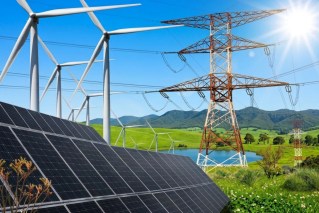
Global energy think tank Ember’s 2026 Global Electricity Review found that renewable energy overtook coal power in 2025, with solar, wind, hydropower and other renewable sources contributing more than a third of global electricity generation for the first time.
In Australia, we also reached a key milestone, with renewables and energy storage contributing 50 per cent of electricity in our main grid in the last three months of 2025. The benefits are now starting to be felt by everyday Australians with the Australian Energy Market Operator just announcing that benchmark power prices would fall by up to 10 per cent, in part because batteries were reducing reliance on expensive gas during evening peaks.
With Australia’s own progress we have greater credibility to build momentum and support for an ambitious global goal on electrification that helps countries reduce their dependence on imported oil.
With a proud diplomatic history, we are well-placed to rally support from other countries, bring parties together and present concrete plans to accelerate the clean energy transition.
Leadership on climate and energy will strengthen Australia’s own prosperity and security.
As a country with some of the world’s best renewable energy resources, we have much to gain. Bowen has set out the clear national security benefits. “No one can sanction the sun, no one can blockade the wind,” he said. “Solar energy has to travel 150 million km to earth, but it does not have to travel the 150 kilometres of the Strait of Hormuz.”
Playing a strong coordinating role will support Australia’s strategic interests now and in the long term. Australia is helping organise pre-COP events in the Pacific later this year, showing faith with our Pacific partners at a time of intense competition for influence.
Through this role, Australia has the capacity to shape a stable, orderly global transition towards cheaper and more secure energy.
Melissa Conley Tyler is an Honorary Fellow in the Asia Institute of The University of Melbourne and a Fellow of the Australian Institute of International Affairs
Want to see more stories from The New Daily in your Google search results?
- Click here to set The New Daily as a preferred source.
- Tick the box next to "The New Daily". That's it.

Pork barrel rolls out again – it's time for a change
Long-awaited migrant plan reflects needs and fears