Adelaide baker Dahlia Matkovic was just 27 when she noticed something unusual in the toilet bowl. Listening to her instincts led quickly to a cancer diagnosis – and probably saved her life.
Nobody wants to talk about poo. We flush, we wash our hands, we move on – and we definitely don’t stop to study what’s in the bowl first.
Dahlia Matkovic wishes more of us would.
In 2018, Matkovic was 27, fit, and busy running an Adelaide bakery with her husband when she spotted some redness in her poo.
She’d recently dyed her hair pink – so she asked a colleague whether that might explain it.
“I told one of the bakers. I was like, ‘I’ve noticed a redness in my stool. I’ve just dyed my hair pink. Is that a thing?’,” she said.
“They’re like, no, that’s not how it works.”
A week later what Matkovic saw in the toilet bowl was scarier. After a day out at a winery festival, she passed what she describes as a “big blotch of pure blood, which absolutely wigged me out”.
Her best friend, who is a nurse, and her mother-in-law both told her not to panic and to see a doctor later that week.
In the end, she couldn’t wait.
“I asked for advice, but then I just followed my gut,” she said.
Matkovic went straight to a walk-in clinic, got blood tests, and within days was referred to a specialist for a colonoscopy. She woke from it expecting to find out it was “something easy to fix, like polyps”. Instead, a surgeon told her they’d found a large tumour.
It was stage-three bowel cancer.

Matkovic ran Adelaide’s Brighton Jetty Bakery with her husband. Photo: Instagram
You’re never too young
Like most people her age, Matkovic had never thought bowel cancer was something that could happen to her.
“I didn’t even know what a colonoscopy was,” she said. “I was floating through life, had no idea.”
She’d done gymnastics five times a week as a kid, stayed active through gym and Pilates, and was “the healthiest she’d ever been”. She didn’t fit anyone’s mental picture of a cancer patient – which is exactly the problem.
Bowel cancer is the leading cause of cancer-related death in Australians aged 25-49, and cases in younger adults are rising. Most stomach cramps or changes to your bowel habits won’t be cancer – but young, fit and healthy is no longer a reason not to check.

Matkovic helped create awareness around the use of ileostomy bags. Photo: The Post
Meet the stoma baby
Surgery came first. After removing the tumour, doctors gave Dahlia an ileostomy – a section of small bowel brought out through her stomach so waste drains into a bag.
Her preferred description: “Imagine a garden hose. Slit a hole in it. Pull a bit up out of your stomach.”
“Literally shitting out of your side, and you won’t even notice, because it’s going into this bag,” she said. “It’s crazy.”
Plenty of people with stomas never tell their friends, or even let their partner see, because of “the ick factor”. Matkovic took the opposite approach. She nicknamed hers her “stoma baby” and started posting photos on Instagram.
“It can be quite the invisible illness,” she said. “You can’t see it’s under your clothes. There’d be lots of people that you know that have one, and you would have no idea.”
Chemo Themeo
Eight weeks after surgery, when Matkovic started six months of chemotherapy, she decided to have some fun with it.
“I kind of turned chemo into a bit of a laugh, to be honest,” she said. “I called it Chemo Themeo, and each week I’d dress up as some sort of pun.”
There was Chemo-Patra, Chemo-flage, Evil Chem-Evil, and, because cancer is also an astrology sign, a crab.
“It just stopped people from dreading my chemo days,” she said. “They’d be excited to see what I was going to dress up as.”

Matkovic dressed as ‘Chemo-Patra’. Photo Instagram
The advocacy worked both ways, she said – being able to talk about what she was going through, out loud and in costume, ended up being part of how she got through it.
Two months after chemo finished, her stoma was reversed.
Last month she completed her fourth JLF Trek & Trail Run, a 72-kilometre walk-and-run that raises money and awareness for bowel cancer prevention and early detection.
The advocacy is the part she didn’t expect to love. Strangers message her constantly to say they got something checked because of her.
“I still get messages all the time saying, like, ‘I did this because of you’,” she said. But she still has friends who wait months after spotting blood in their stools before getting it checked out.
Blood in your poo, on your toilet paper or in the toilet bowl should always be checked with a GP. Other bowel cancer symptoms can be more subtle and are important to also pay attention to.
“Just know what’s normal about you. Be honest with yourself,” Matkovic said. “Do you have a regular bowel movement? Has the consistency of your bowel movements changed? As soon as you acknowledge it, you can start to fix it.”
Let’s talk crap
The Bowel Movement is a new SA-grown campaign by the Flinders Foundation, supported by Preventive Health SA, and built on the sensible premise that we need to stop being too embarrassed to “talk crap”.
Bowel cancer is the second-biggest cancer killer in Australia – and it’s one of the most treatable when caught early. But people don’t talk about it because they’re embarrassed.
They don’t tell their GP about a change in their bowel habits. They don’t even tell their best friend. That silence is what the campaign is trying to break, with the help of toilet paper, puns and a poo quiz.
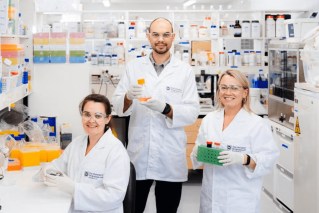
Behind the wordplay is serious action. Researchers at the Flinders Centre for Innovation in Cancer – led by Associate Professor Erin Symonds – are working on better, more user-friendly screening tests, ways to improve detection accuracy, and catching bowel cancer earlier in younger people.

Matkovic tried to keep positive throughout her treatment. Photo: Instagram
Taking the poo talk to work
The need to talk more openly about bowel health is a message echoed by the Jodi Lee Bowel Cancer Foundation, whose awareness campaigns – like View Your Poo! and Trust Your Gut – focus on recognising what’s normal and acting early when something changes.
JLF is also raising awareness in workplaces. What started as in-person sessions in South Australian businesses, featuring talks from Foundation ambassadors like Matkovic, has expanded nationally with the Poop Quiz program – digital workplace health education disguised as a game show. The program is hosted by JLF ambassador Shelly Horton.
So what should you actually look for?
Things worth booking a GP appointment for: Blood in your poo (even once), a change in bowel habits that lasts more than a couple of weeks, persistent abdominal pain, unexplained tiredness or weight loss, or a lump in your stomach or rectum.
Most of the time, it will be other problems like irritable bowel syndrome or haemorrhoids, But “most of the time” isn’t the same as “always”, and a GP visit is a much smaller deal than the alternative.
The Jodi Lee Foundation’s free Trust Your Gut online symptom checker is a good five-minute starting point if you’re unsure.
If you’re 45-49, you can opt in to a free at-home screening test. If you’re 50 or over, one arrives in the post every two years – don’t leave it in the drawer. If you don’t qualify for a free screening test you can buy a similar test from the Jodi Lee Bowel Cancer Foundation website or at a pharmacy.
Matkovic said it was important to get checked if you had any symptoms. She’s the first to understand why people put it off – but adds that that isn’t really about the individual.
“If you don’t want to do it for yourself, do it for the people around you,” she said.
“My mum was so devastated. My family was devastated. My husband had to go through it. If you’ve got kids, they’re going to go through it.
“All these people live with the consequences of your decision to either seek treatment or not.”