Growing Up in Australia: Capturing diversity of nation through thought-provoking recollections

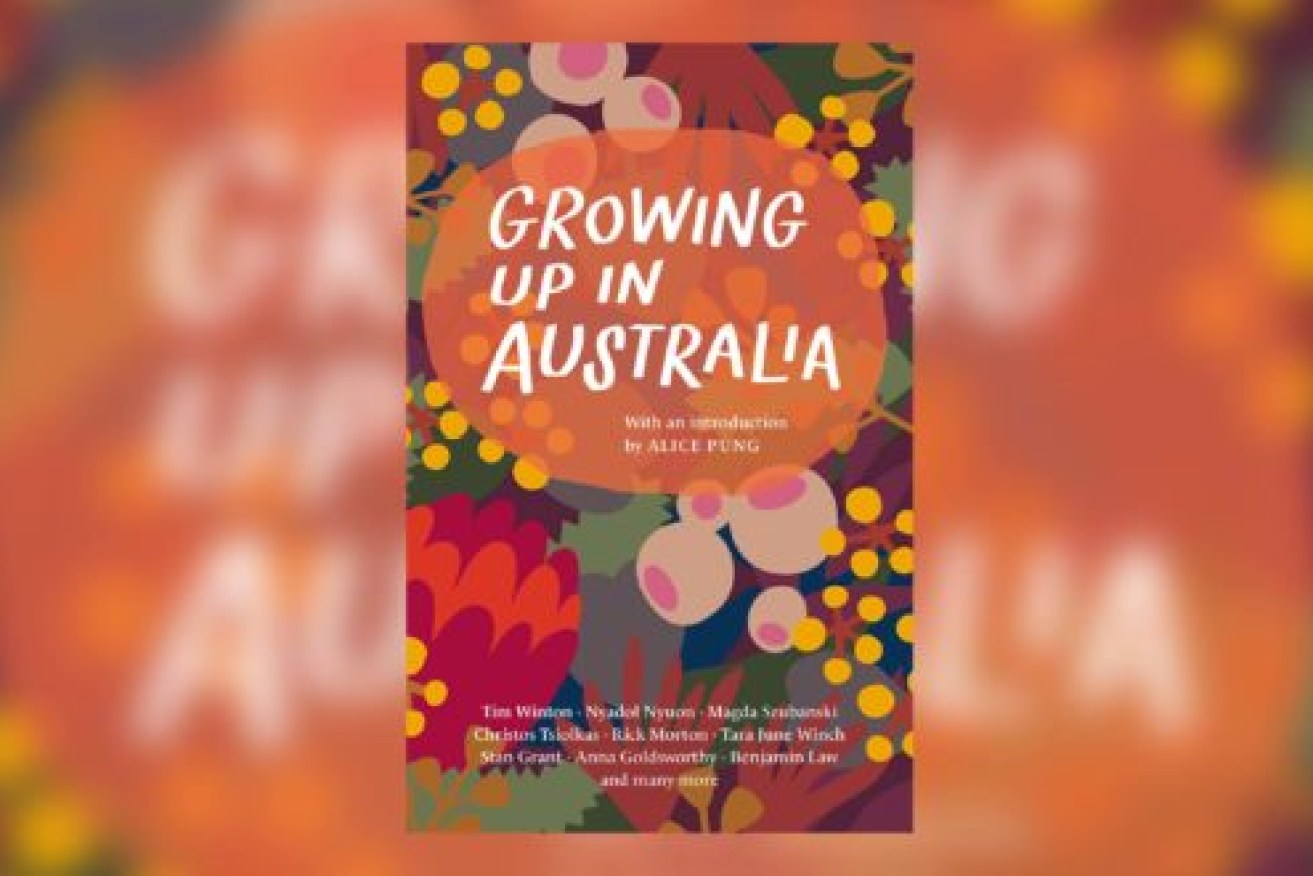
Memoirs that illustrate what it is to be an Australian. Photo: Black Inc
In her introduction to this volume, Alice Pung praises the “Growing Up” series, of which she edited the first volume (Growing Up Asian in Australia) in 2008, for its role in “countering the ‘proper’ childhoods propagated by Neighbours, The Saddle Club and American television”.
Over 14 years the series has grown to encompass stories from specifically Aboriginal, African, queer and disabled childhoods.
Growing Up in Country Australia is in progress.
Growing Up in Australia provides a kind of overview of what Pung calls “true Australian childhoods”, drawing on the series so far – and on a selection of memoirs.
Stan Grant’s recollections of “exclusion and difference” as the “abiding lessons” of his early school years (from his memoir Talking to My Country) powerfully open the anthology.
Aged 15, Grant’s principal takes aside the Aboriginal kids to suggest that they leave school.
From his earliest history lessons, his ancestors are written out.
“We didn’t even exist.”
Then, a brief, glinting note of contrast (or “reprieve”), in the years 13 to 15, when “the white kids wanted to be us … to talk like us and act like us”.
The memoir extracts also serve to bring in the kinds of Australian childhoods we might indeed see on Neighbours.
Anna Goldsworthy’s squarely middle-class Piano Lessons in suburban Adelaide, as she attunes herself to the “alternative universe” of music, her fascinated dedication taking her to the doorstep of a career.
And from Land’s Edge, the summer shack that gifted a six-year-old Tim Winton his twin passions of reading and the coastal outdoors.
This is less a “best of” anthology than one that seeks to be broadly representative – a book that immediately brings to mind how useful it will be in the classroom.
While all the stories read well, some are more notable for the fresh perspective of their content than their storytelling craft.
Others shine on both levels: For instance, non-binary critic Oliver Reeson’s intricately woven essay, St Louis.
They write about discovering their non-binary self in conversation with the life of Harold Brodkey, a New York writer who lived as “a married heterosexual man whose romantic life was separate to his sexual one”.
Reeson, who didn’t recognise themself as non-binary until adulthood, relates to Brodkey as “someone who couldn’t allow themselves to be seen and didn’t recognise why until later in life”.
It’s a poignant, perceptive account of not just the arrested coming-of-age of its two focal characters – Reeson and Brodkey – but of the difficulty of recognising who you are when it’s “not a story I had ever heard”.
Lack of representation as a barrier to self-acceptance and understanding, and the invisible (to the mainstream) privilege of seeing your experience widely represented is a common thread in these stories, unsurprisingly.
Read together, they achieve the anthology’s implicit aim of broadening the view of what growing up in Australia entails, and who an Australian is.
Indigenous actor Miranda Tapsell’s catchily titled Nobody Puts Baby Spice in a Corner navigates an “in-between” identity, surrounded by white friends who “chose not to see colour” on an everyday level, yet subconsciously pigeonholed her on that basis.
The simple framing story – her friends insisting she come as Scary Spice to the school dance, when she wanted to be Baby Spice (“no one else is brown!”) – brilliantly illustrates her complex experience.
“I realise that I wanted to be an artist because then I could take back the control of who I wanted to be,” she concludes.
Vanessa Woods, the daughter of a Chinese mother and Vietnam veteran father (who left when she was five), also explores liminal territory in Perfect Chinese Children.
In a story characterised by biting self-directed humour blended with compassion, she navigates her insecurity about being insufficiently Chinese and not living up to her family’s high standards, conflating the two.
Growing Up in Australia is published by Black Inc.
This article first appeared in InReview. You can read the original here.