Aussie entertainment is booming but who benefits?
Source: AAP
Australian films and television shows are enjoying a moment in the spotlight as local productions find success both at home and on the international stage.
Animated children’s show Bluey has been a rip-roaring success, the six-part miniseries My Brilliant Career rose to No.2 on Netflix and 2022 horror film Talk To Me was a US box-office smash.
Australian actors are no strangers to international recognition either.
Joseph Zada has led the latest Hunger Games instalment, Margot Robbie is starring in and producing an Ocean’s Eleven prequel and Hugh Jackman has been cast as pirate Long John Silver in a live-action adaptation of Treasure Island.
Back home, Daley Pearson is enjoying success as the creator of the Netflix film Allen and as an executive producer on Bluey.
Pearson said Australians had always created great projects but would “roll the dice” only on safe bets back when there were fewer distribution companies.
Now, that’s changed.
“I think with people like Netflix – with Allen – who take the risk and have the confidence to try stuff that’s very local, in the hope that it will be global,” he said.
Pearson hopes global hits such as Bluey and Talk To Me will encourage distributors to further chance their arm.
“Motion creates motion and success gets success … I hope, because they’ve had success, that it gives the next person more confidence to not only make it but the other side of it – to take a bigger chance on them,” he said.
“I hope … these broadcasters and distributors take chances on new talent capable of doing brilliant stuff with the right support and right team around them.”

The depth of Australian talent that is making waves overseas continues to grow. Image: AAP Photo: AAP
Heartbreak High is another Australian show going gangbusters internationally.
The final season debuted at No.1 on the Netflix Australia and New Zealand Top 10 English show lists and No.10 on the global list, with 2.4 million views in its first week.
Chloé Hayden, who played Quinni in the Netflix reboot, said the series had opened doors for her and fellow cast members.
“I think there’s something about Australian storytelling that is just so unique and authentic,” she said.
“I think we have a way of sharing stories and I also think we have a way of writing comedy that is so different from other countries.”
Hayden said Australian productions tended to be raw and gritty – and the industry wasn’t trying to be something it was not.
“Because there is less of a fear of what we’re putting out, people resonate with it so much more,” she said.
Pearson agreed, saying Australian talent and crews weren’t blinded by Hollywood’s bright lights – they’re in the “mud”, creating things they love.
“You’re not joining the film and TV industry to join showbiz,” he said.
The people he had worked with over the years were more like “monks” who saw their work as a “vocation”.
“They love being in rooms, solving problems and figuring out how to make stuff exist that doesn’t exist, and figuring out how to tell stories to people,” Pearson said.
The screen industry boom is also reflected in the numbers.
Spending on foreign television and video-on-demand drama reached $458 million in 2024/25, according to Screen Australia – more than quadruple the previous year.
A record $1 billion was also spent on 20 internationally produced feature films.
“While these major platforms are internationally owned, the Australian content they commission creates opportunities for Australian creatives and crews,” Screen Australia chief operating officer Grainne Brunsdon said.
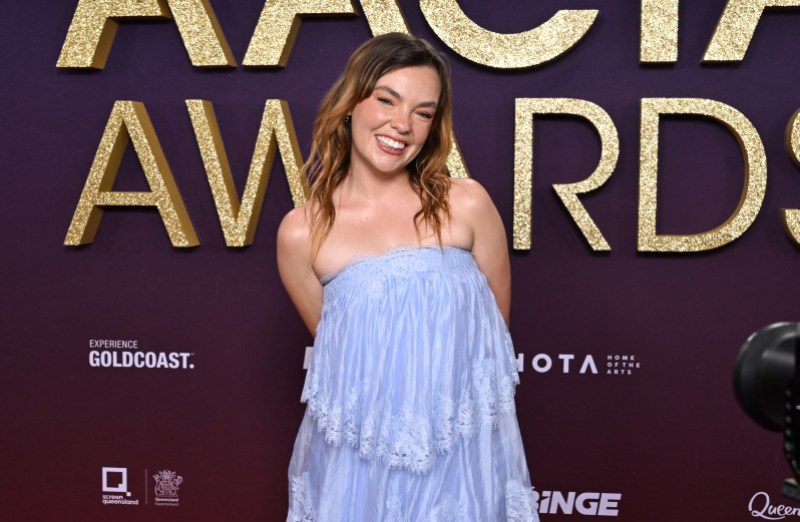
Heartbreak High star Chloé Hayden said Australian productions tended to be “raw and gritty”. Photo: AAP
Screen Australia also invested $73 million directly in the screen and games industries in 2025/26, supporting local productions and talent development.
“Australia has world-class screen capabilities, including its skilled workforce, production infrastructure and technical expertise, which continue to attract international productions and investment,” she said.
“These strengths position Australia as a globally competitive production partner, supporting both economic activity and opportunities for skill development, collaboration and knowledge exchange.”
According to Brunsdon, Australia is a world leader in high-value production and the industry is evolving in response to a rapidly changing global landscape.
While the international appetite for Australian productions has grown, it doesn’t mean things are easy.
Rob Gibson is chief executive and producer at Easy Tiger Productions, overseeing shows such as Colin from Accounts, Treasure & Dirt and The Twelve.
“It’s a particularly tough industry here because the market is small and there’s a ceiling on how much success you can have here,” he said.
Which is why producers look overseas for financing – there’s a limited number of slots in the Australian marketplace.
Gibson said the national market had contracted further in the past year as countries such as the US and Britain focused on domestic markets.
“There was a real moment about a year ago and Colin from Accounts was part of that wave, when a lot of Australian television was hitting the spotlight,” he said.
“Those shows are still there but budgets have been cut. The BBC has had a huge swathe of cuts and they’re looking a little more towards British-first content.”
According to Gibson, many people who’ve had successful television or film projects in Australia head straight to the US because there’s more headroom there.
“It is hard to make it sustainable,” he said.
Global streamers, however, work slightly differently.
If you can get the right project to the right people, Gibson said it shouldn’t matter where it came from – as long as you could deliver quality.
“Overall, the opportunity is still there. You have to be a little cleverer, more strategic and more nimble in the way you approach the market,” he said.
“I would say it’s still positive and there’s still great goodwill internationally for Australian content.”
In a dream world, creatives can find success with a franchise that can roll out multiple seasons and series.
Gibson points to the triumph of the British period drama series The Other Bennet Sister, which is a fresh take on Pride and Prejudice.
The BBC has also announced The Other Elliot Sister, featuring characters from Persuasion, another Jane Austen novel.
“That’s what success looks like in the UK or US market,” Gibson said.
“If you find something that works, you ask what else is there? What else can we do?”
Underbelly aside, Gibson didn’t consider many Australian television franchises suitable for spin-offs.
“That’s the slight issue here. There’s a little less headroom to capitalise on success,” he said.
Still, he hoped there was a bottom to the market as well.
“Because of the great government support we get, including tax rebates and state and federal government investment bodies, as well as networks that want to keep the industry functional, we’ll keep going,” he said.
-AAP