Diners urged to support Chinese restaurants as customer numbers plunge

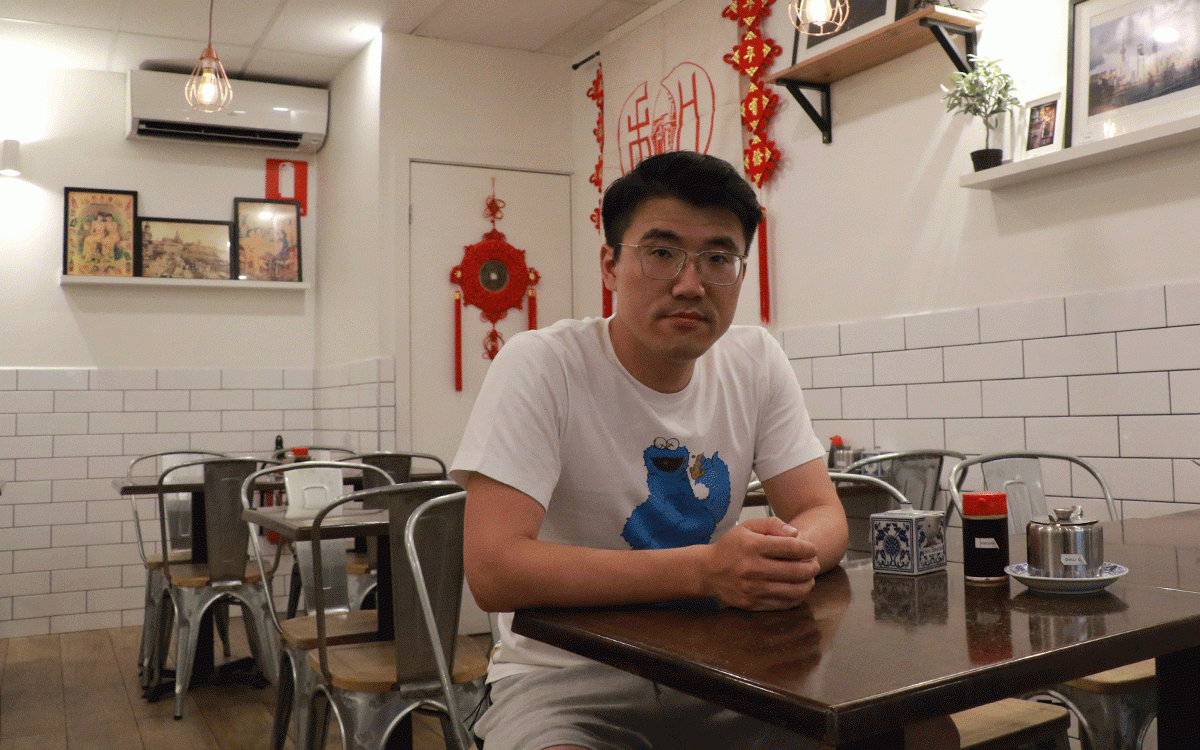
Nong Tang Noodle House owner David Yang said customers have been scared off by sensationalist media coverage. Photo: Isabelle Lane
Melbourne’s famous Chinatown precinct is normally bustling.
Now, on a weekday lunchtime, there’s an unnatural quiet.
In one restaurant window, a trio of chefs in crisp white jackets and hats deftly fold dumplings.
But inside, the tables are mostly empty.
At another, a waiter stands in the doorway, waiting for customers
A third restaurant has signs on the window and door, informing prospective patrons that it is disinfected every two hours.
Across the nation, Chinese restaurants are struggling to keep their doors open, with customer numbers collapsing due to coronavirus fears and an associated travel ban.
David Yang, owner of Nong Tang Noodle House in Bourke Street’s Mid City Arcade, told The New Daily that Melbourne’s Chinese restaurants have been hit hard.

Melbourne’s Chinatown precinct has been unusually quiet. Photo: Isabelle Lane
Mr Yang said the number of customers dining at his restaurant plummeted by about 60 per cent three weeks ago, and business has not picked up.
He attributes the downturn to “negative news” about the coronavirus fuelling “discrimination”.
Businesses that cater mainly to international students and tourists kept away by the travel ban are doing it especially tough, he said.
Restaurateurs from across Melbourne have been communicating with each other via a WeChat group, Mr Yang said, with many fearing for their business’ future.
“Some restaurants have had to temporarily close,” he said.
Chinatown precinct president Danny Doon said people are “not coming out as they normally do”.
I want people to know it’s quite safe,’’ Mr Doon said.
“Continue to do what you do every day, go out, see friends, and enjoy yourself …There’s nothing to worry about.”
Mr Doon said there is a “general feeling” of concern about the downturn among traders.
Any business can’t keep going like this, if customers are not coming out and not spending,’’ he said.
Earlier this week, council members including Lord Mayor Sally Capp went for lunch in Chinatown to show their support for traders.

Melbourne’s Lord Mayor called on locals to support affected businesses.
“We know that a number of businesses in the CBD are experiencing a significant downturn in trade – particularly those businesses that cater to Chinese visitors to Melbourne,” Lord Mayor Capp said.
She called on “all locals to get out there and support” the businesses.
We want to see people lining up again to get a table at restaurants in Chinatown,’’ Lord Mayor Capp said.
“The expert advice we’ve received from health agencies regarding novel coronavirus is that there is no increased risk in Melbourne at this stage.
“There’s no reason for the general public to panic or change their normal activities or plans.”
In Sydney, Lord Mayor Clover Moore denounced “the spread of abhorrent racist prejudices towards Chinese-Australians”.
The most concerning impact of this virus is the risk of fear and panic,’’ Lord Mayor Moore said.
“We must be vigilant in preventing the contagious spread of inaccurate and exaggerated information and the resulting stigma and discrimination.”
Prejudice drives coronavirus panic
“If we’re looking at what appears to be prejudicial behaviours, they’re probably a sign of people who are highly anxious, stressed, a bit confused and worried, and don’t feel like they have good information about the real risk of exposure to the coronavirus,” Professor Walker said.
“So it’s unsurprising under those conditions that you see some examples of this behaviour.”
Australia also has a “long and not proud history of anti-Chinese sentiment and behaviour” dating back to “the gold rushes and earlier”, Professor Walker said.
“That’s a background factor that’s always there. It’s part of what can be uncorked when the circumstances are right.”
However, people who indulge prejudice and irrational fears may “paradoxically” be putting themselves at more risk.
“A lot of people who engage in these sorts of behaviours think they’re acting in their best interests,” Professor Walker said.
“Paradoxically, if they focus on Chinese people they’re possibly increasing their risk of exposure to the virus because that isn’t the right focus. [They may be] unwittingly ignoring other possible sources of infection.
What they think is rational behaviour is actually counter-rational.’’
Professor Walker said the best way to counter unnecessary panic about the coronavirus is to “encourage people to seek accurate information from relevant, trusted authorities about the real risk of exposure” and “not to rely on gossip in social media” .