Customers slugged as prices of supermarket staples soar

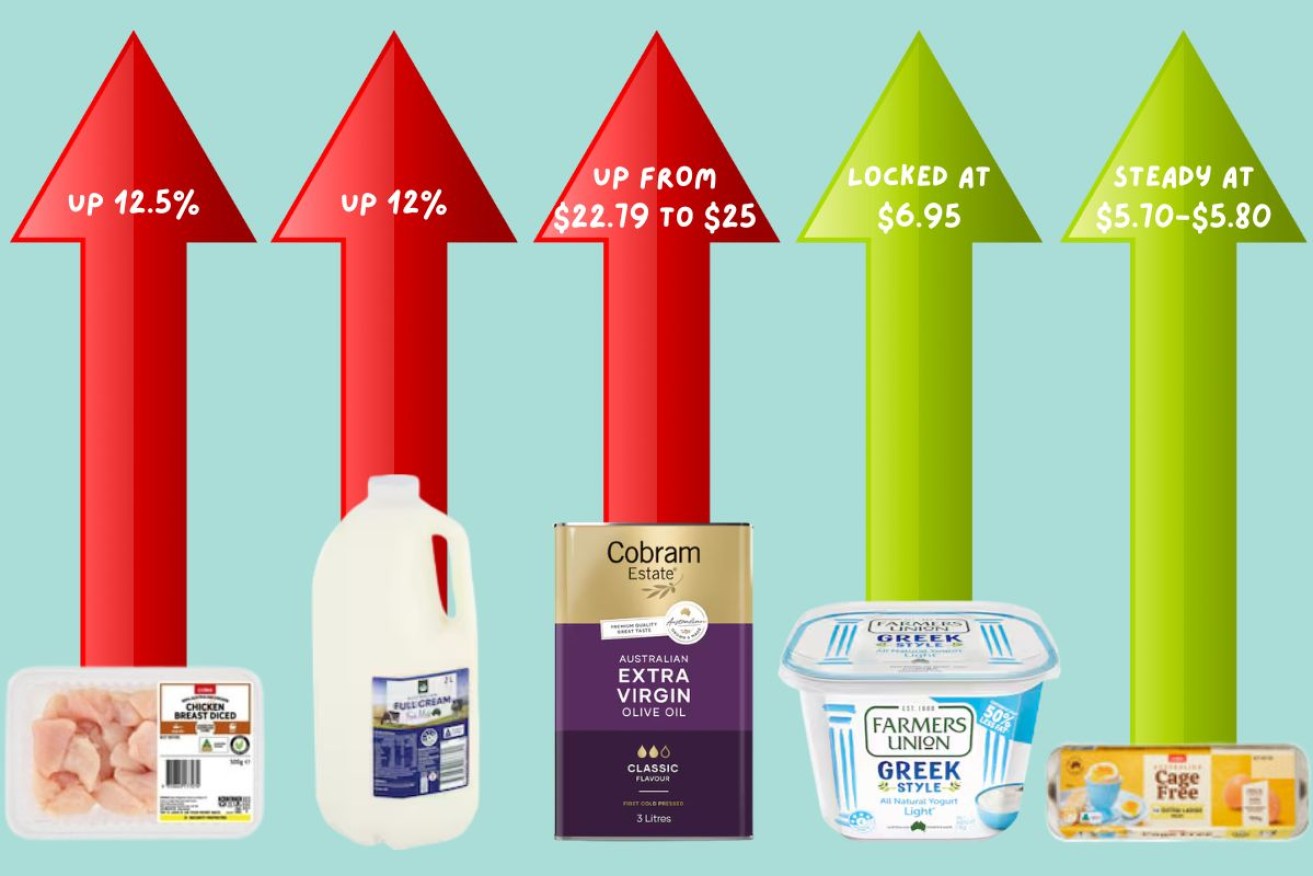
Going up – chicken breast, milk and olive oil all cost much more than a year ago, while the prices of yoghurt and eggs are steady.
The price of some supermarket staples has soared by well above already-high inflation rates this year, putting further pressure on Australians battling amid the cost-of-living crisis.
Some of our favourite purchases, including milk, beef mince and olive oil, have leapt up to 13 per cent since January, according to data from AI-powered price comparison tool Zyft.
“We’ve been told to expect grocery price hikes because of the Iran war fuel crisis, and now they’re here. Meat, dairy and other fresh foods are first and then it will flow through to pantry goods, cleaning and toiletries,” Zyft consumer finance expert Joel Gibson said.
“By the end of the year, we might have a double-digit percentage increase in the cost of a grocery shop, which means over $1000 more for an average household per annum. But it’s also worth noting that it’s patchy, so there are still some bargains for savvy shoppers.”
In some of this year’s biggest price rises, Zyft found:
- Beef mince went up 12.5 per cent at both Coles and Woolworths within two weeks of each other in February;
- Butter (500 grams) — climbed 11.8 per cent from $8.50 to $9.50 across both majors between February and late May;
- Diced chicken rose 12.5 per cent at Coles from $8 to $9 in late April to match Woolworths’ price;
- Woolworths milk jumped 12.0 per cent from $4.15 to $4.65 after a sharp step-up in mid-May
- The monthly average price for Cobram olive oil jumped from $22.79 to $25.00 on the back of global supply pressures.
It came as annual inflation hit 2.5 per cent in Australia’s most recent data. But the OECD has predicted it will rise to 4.4 per cent throughout this year, while the Reserve Bank has forecast 4 per cent.
The central bank lifted official interest rates at its last meeting in May, taking the cash rate back to 4.35 per cent and wiping out more than a year of cuts. The move has inflicted further pain on Australian households struggling with the rising cost of living.
The RBA meets next week to consider its next interest move. However, it is tipped to leave rates on hold after softer than expected inflation and jobs data for April.
Back in the supermarket, some products have dodged the extreme price hikes. They include:
- Tub yoghurt, which has been locked at $6.95 at both big supermarket chains throughout this year;
- Coles whole chicken has remained essentially flat, making it a far smarter buy than diced chicken right now;
- A dozen cage-free eggs has held steady between $5.70 and $5.80 throughout the year.
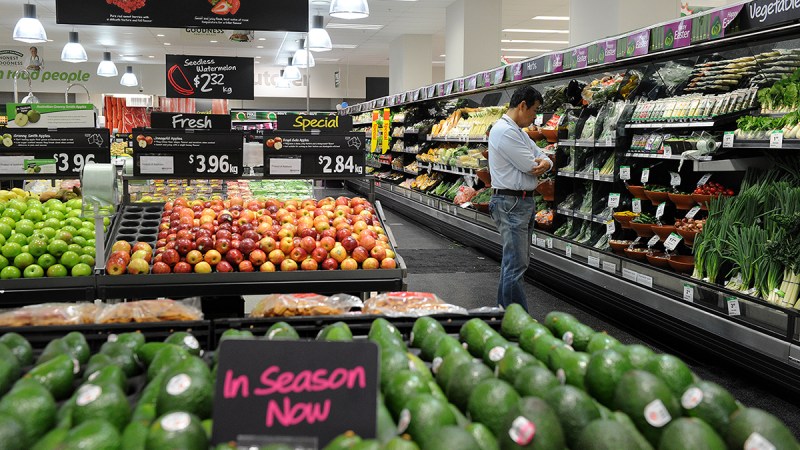
Woolworths has frozen prices of 300 products until August. Photo: AAP
Earlier this year, Woolworths said it was freezing the price of 300 grocery staples – including chicken breast, eggs and toilet paper – for three months from May 1. Group chief executive Amanda Bardwell said the war in the Middle East had brought a wave of uncertainty and customers were worried about their household budgets.
“While we don’t know how long these challenges will last, or what the full impact of higher costs will be on our customers’ favourite products, we know a little certainty can go a long way,” she said.
Gibson said the unchanged price of Farmers Union yoghurt in the first half of 2026 was an example of how that freeze was working.
“One supermarket locked the price as part of its promo and the other has probably been forced to match the price,” he said.
“So there are some examples where you can benefit from these promos, but they only cover a few hundred products out of the thousands of products they sell – so they’re largely a marketing exercise.”
While Zyft has singled out some of our most common purchases, Gibson said the trends were likely repeated across supermarkets with almost every price rising in the past six months.
“Groceries go up every year, of course, even without a war in the Middle East. But this year it’s a double whammy, and households will really be starting to notice this bill ballooning, because it’s already the second biggest cost in most household budgets,” he said.
He urged consumers who wanted to save at the till to check prices before they tossed groceries in their trolley.
“We need to apply some strategy to our shop these days. If you’re shopping online, use price checker plug-ins to see if products are cheaper at another supermarket or an online marketplace and maybe have two carts you’re filling at the same time,” he said.
“Or spread your shop across two retailers or more and look for the best specials and prices on each item. When you’ve got Aldi alongside a Coles or Woolies, it doesn’t take much longer to visit both.”
Customers should also consider using fruit markets and bulk buy warehouses, if they could.
Want to see more stories from The New Daily in your Google search results?
- Click here to set The New Daily as a preferred source.
- Tick the box next to "The New Daily". That's it.