The Revenant is the most beautiful film of the year

Even before its mainstream release, The Revenant has been over-hyped in the media and online for its alleged “extreme violence”.
The true story of real-life frontiersman Hugh Glass’ quest to avenge his son’s death, directed by Mexican mastermind Alejandro G. Iñárritu, it has already had its fair share of audience walkouts, complaints and scandal.
That’s quite the accomplishment today, when our nightly news is full of videos of beheadings and directors like Quentin Tarantino think nothing of staging a 15-minute shootout.
Gratuitous violence is the hallmark of most of television’s biggest shows this year, so you’d think we’d have seen it all by now.
The Revenant is a different kind of violent – it’s positively grotesque.
Necks are ripped out, horses’ innards are removed with a man’s bare hands, and there’s even a Mike Tyson-esque ear-biting incident.
Yet somehow none of this graphic action feels superfluous. Rather, it’s a realistic and authentic portrayal of the capabilities and survival instincts of mankind when pushed to the limit.
So many action films fail to realistically reflect the repercussions of extreme violence, with perfectly coiffed action stars emerging from gunfights with neatly-drawn scratches.
After being mauled by a bear, witnessing the murder of his teenage son and being left for dead in the brutal cold by his comrades, fur trapper Glass (Leonardo DiCaprio) is a mess of blood, bone and hacked-up flesh – as he should be.
Glass must battle man, beast and nature in his efforts to find the man who betrayed him, fellow trapper John Fitzgerald (played by Tom Hardy).
But the violence in The Revenant is a mere sideshow to the film’s breathtaking beauty.
Cinematographer Emmanuel Lubezki has won the Academy Award for cinematography for the last two years and is a favourite to win it again next year. It’s obvious why.
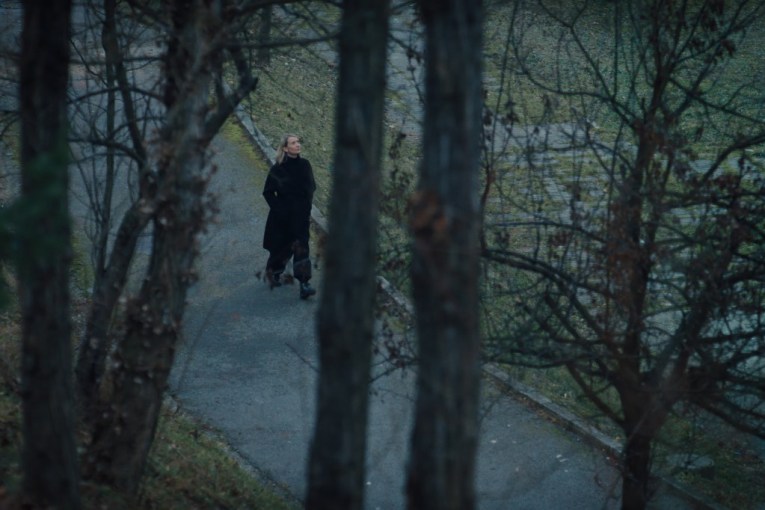
From the dappled light on the back of a Native American man riding into combat, to the snow-coated sweeping landscapes of British Columbia, The Revenant is exquisitely shot.
This heaven-like setting is contrasted brilliantly with the primal drives of the men inhabiting it as they struggle to make a living in 1800s America.
• The Martian might just be the perfect movie
• Leonardo DiCaprio’s new film has moviegoers running for cover
• This is the most sickening movie in cinemas
DiCaprio delivers an incredible performance, fighting just as hard for an Oscar as he does for his life. As Glass, DiCaprio has barely any dialogue and must instead communicate solely through grunts, facial expressions and body language.
As the criminally selfish Fitzgerald, Brit action star Tom Hardy is spectacular – finally shirking his perennial “supporting actor” status with a performance that is difficult to pull your eyes away from.
The camera often focuses intensely on Hardy’s face throughout and the audience reaps the benefits – he is at once unstable, stoic, enigmatic and entertaining.
If DiCaprio claims the Oscar for Best Actor, Hardy should at the very least nab a nomination for Supporting Actor, although there is nothing secondary about his performance.
Contrary to what its rip-roaring trailers would suggest, The Revenant isn’t a fast-paced action flick. There are moments of intense activity, punctuated by extended periods of silence or muffled conversation.
The soundtrack is minimal, and long dream sequences and flashbacks overlaid with Native American imagery and voiceovers call to mind Terrence Malick’s 2011 opus The Tree of Life.
Aside from the occasional departure from narrative storytelling however, what underpins The Revenant is a refreshing sense of realism.
Lubezki’s insistence on using only natural lighting pays off with every single frame of dazzling, crisp imagery. It also serves to make the shots of glistening animal entrails, weeping wounds and dead bodies even more confronting.
But this isn’t violence for the sake of violence, it’s realism for the sake of beauty. Welcome to the future of filmmaking.